
This is a repost from our old blog, originally published Sep 2, 2022: https://web.archive.org/web/20220902214341/https://blog.cheatlayer.com/introducing-project-atlas-72fff115149d?gi=20ec0f4a6f0e
During the pandemic, I was donating my time to help my friends and strangers build online businesses. People started referring me, and suddenly people globally asked for help. The problem quickly grew larger than I could solve.
I helped a man in France build video-ordering for retail stores, I helped my friend bring his events business online, and I helped a homeless woman building 3D scanned perfect-fit dancing shoes. Cheat Layer grew out of that same effort. I similarly personally met with and helped many Cheaters build actually valuable products through hundreds of office hours since we launched.
The Root Problem
I realized most of them were running their businesses through a combination of websites like Shopify, Google Sheets, WordPress, etc, but they were wasting hours per day with manual tasks.
Integration services like Zapier often required a software engineer to actually build what they needed. My friend was spending hours per day copying orders manually from Shopify to Optimoroute. We basically needed to build a personal software engineer that magically solved all these problems.
Large Language Models
This was around the same time that language models like GPT-3 were making headlines. The “Holy Grail” for automation, in our opinion, was a language model that magically generated even complex automations and integrations from simple phrases like “Scrape amazon for greenie reviews” or “Tweet daily using the Riku.ai motivational quotes prompt at 10am.”
While GPT-3 allowed training our own code generation, it didn’t translate all the jargon. We had to explain to early users that GPT-3 required knowing what to say, so we launched initiatives like the 6 week GPT-3 Bootcamp to teach users.
However, GPT-3 did not solve the root problem. Our original vision was that users would never need to remember what to ask, and the model would understand users in whatever language they used.
If it worked, that woman could build her shoes while her social media ran on auto-pilot, and my friend could transfer his orders from Shopify to Optimoroute instantly.
The “Holy Grail”
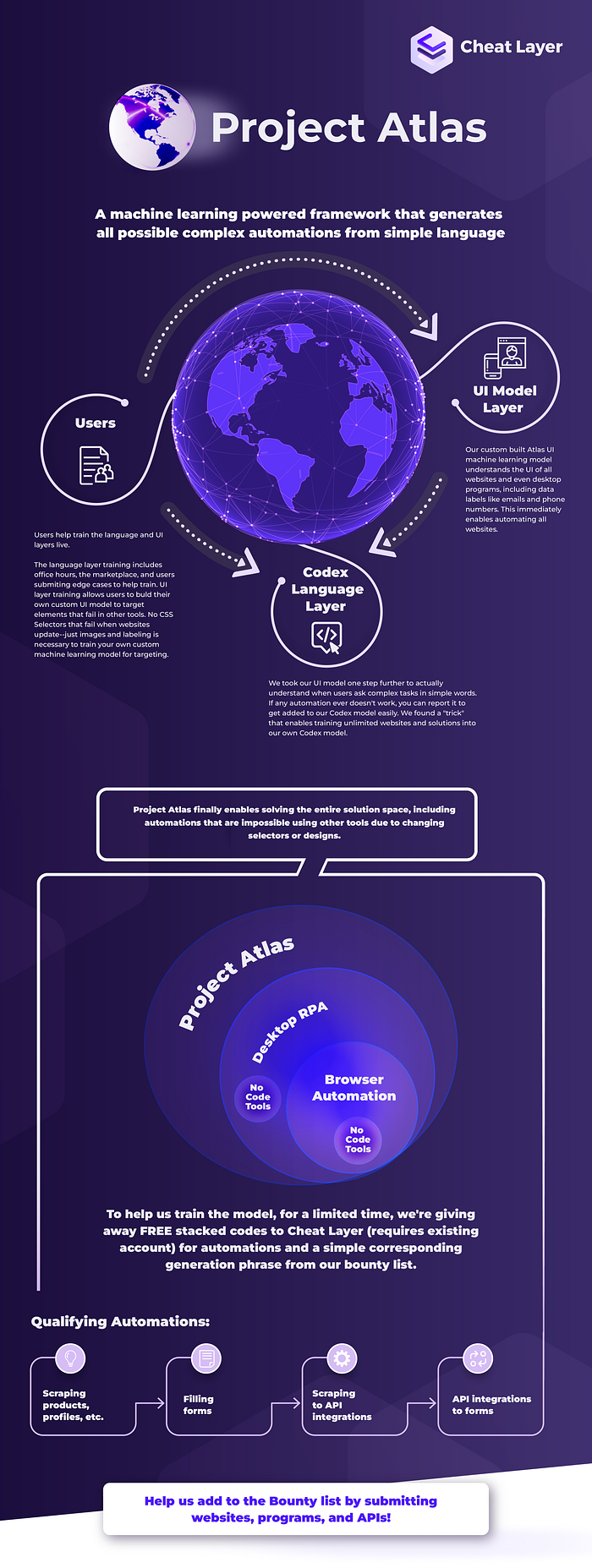
Project Atlas, our new Codex-powered product, finally solves this and meets users at their level of understanding.
All lifetime and subscription users will get access to Project Atlas in the coming days at no additional cost! Project Atlas consumes the machine learning credits users already have.
We trained it to understand whatever users say and map that to our own JSON automation language. Users can even train their own object detection models and target elements that fail in other tools by simply labeling images. This enables building custom automations that are impossible using any other tools, and even re-selling them as products.

Project Atlas solves this problem using two layers:
- UI Layer — A UI machine learning model trained to detect UI components on websites and programs without using CSS selectors/Xpath that may change.
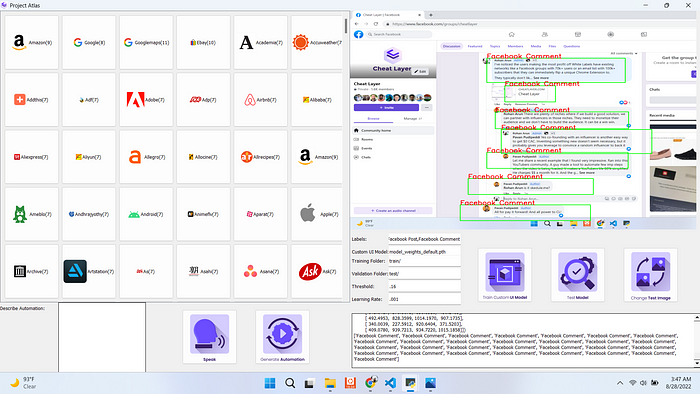
Users can even train their own model by labeling images, so it’s finally possible to automate all those impossible problems with changing selectors. It took about 20 images to train the above custom Facebook comment model in an hour, so it’s very easy for users to train models for anything now.
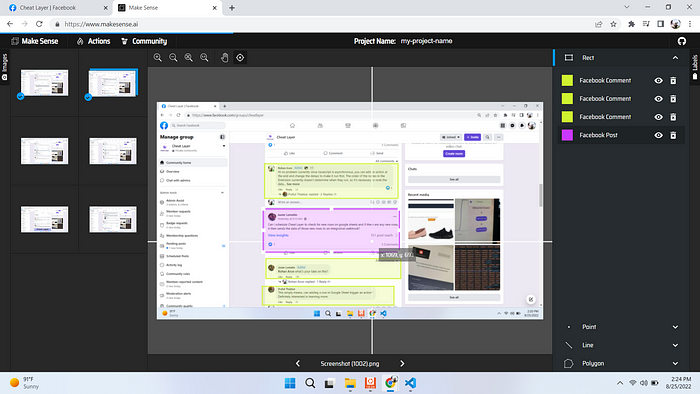
Users can now train unlimited new UI models by simply labeling images entirely no-code. At the lowest level, this finally solves all the remaining road blocks we’ve encountered in office hours for targeting. We’ll publish a list of community models that work immediately after download, and we ship our base UI model with Cheat Layer Desktop. Here’s a tutorial showing how to label images and build your own custom model:
https://cdn.embedly.com/widgets/media.html?src=https%3A%2F%2Fwww.youtube.com%2Fembed%2FFjpmQBMeBbc%3Ffeature%3Doembed&display_name=YouTube&url=https%3A%2F%2Fwww.youtube.com%2Fwatch%3Fv%3DFjpmQBMeBbc&image=https%3A%2F%2Fi.ytimg.com%2Fvi%2FFjpmQBMeBbc%2Fhqdefault.jpg&key=a19fcc184b9711e1b4764040d3dc5c07&type=text%2Fhtml&schema=youtubeTraining Custom UI models for targeting in makesense.ai
2. Language Layer — we trained openAI Codex to generate our JSON automation language, so it would understand what users wanted and meet them at their level of understanding.
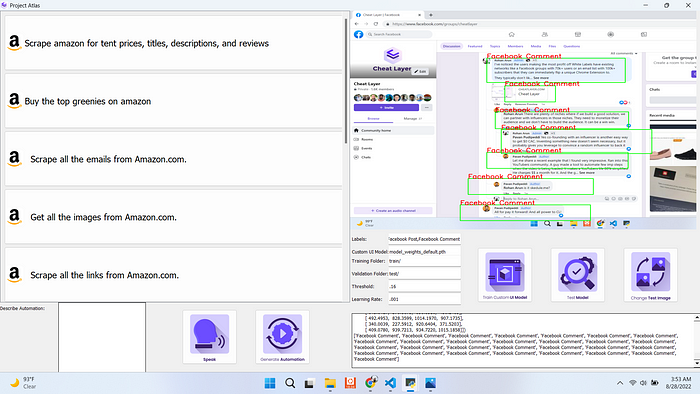
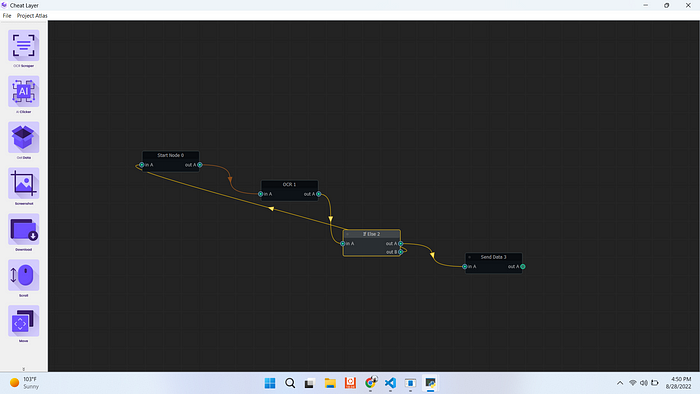
Basically, we trained an AI to use an AI. We’ve pre-trained the model already to support millions of websites out of the box with dynamic phrases like “Get all the tables from X” or “Get all the emails from Y” plus “deep” complex automations on dozens of the most popular websites like Amazon. The result is you can generate millions of automations in seconds with simple phrases. Project Atlas asks you for inputs then builds the whole automation for you:
This finally enables solving the entire automation solution space even in simple language. Every single road block I can remember, from the hundreds of office hours I’ve had now, could be solved with Project Atlas. You can imagine in the worst case, you can always now train your own machine learning model to target elements that failed before.
Bounty List
Any qualifying automation or pre-trained UI model for the websites below can be exchanged for a free stacked code by emailing the solution to support@cheatlayer.com. Users can also nominate bounties to add to this list and help us prioritize!
Cheat Layer Bounty List
Sheet1 academia.edu accuweather.com addthis.com adf.ly adobe.com adp.com air…
Training Project Atlas
We originally gave office hours away as a free service to help us generate training data and iterate the product daily, and as a way for me to continue helping people sustainably. GPT-3 didn’t allow this efficiently due to technical limits, but we now finally have a framework to rapidly validate and train complex examples into our language layer daily. We’re giving away 300+ codes to qualifying automations to accelerate our training and pre-trained models to build our community library. All submitted automations and models must be robust and approved by our team to qualify.
EDIT: We’ve changed how Project Atlas training works and you only need to submit a video of the automation to win a free code. This accelerates training and allows us to train more automations faster.
To submit Project Atlas training, please send a video of you performing the actions manually support@cheatlayer.com. For now there a 3 code limit per account, and codes are applied immediately to prevent re-sale. Here’s a good example: https://sendspark.com/share/j5eslcgig725mpkuvgqapr48y74bfgpb
Project Atlas even automatically detects phrases we don’t support yet, and then sends it directly to us for training. So users can help us train by simply using the product!
I’ve seen Cheaters build some wild automations, including entire products through White labels launching on AppSumo soon, so I can’t imagine what we build next together.
 Cheat Layer Blog

Leave a comment